Punjab Schools Restructuring of Organizational Hierarchy 2026
 Follow YourSiteName on Google News & scroll through your favourite content faster!

When an organization grows as large as the School Education Department (SED) Punjab, small delays, unclear roles, and outdated structures can quietly hurt performance. To address this, the Government of Punjab officially approved a restructuring of the organizational hierarchy of Punjab Schools in December 2025, which will now be implemented in 2026.
 Join WhatsApp
This decision may sound technical, but its impact is very real. It affects teachers, officers, education managers, IT systems, monitoring teams, and ultimately students. In this blog post, we’ll explain what this restructuring means, why it was needed, and how it may improve the education system in Punjab—using simple, human-friendly English.

What Is the Punjab Schools Organizational Restructuring 2026?
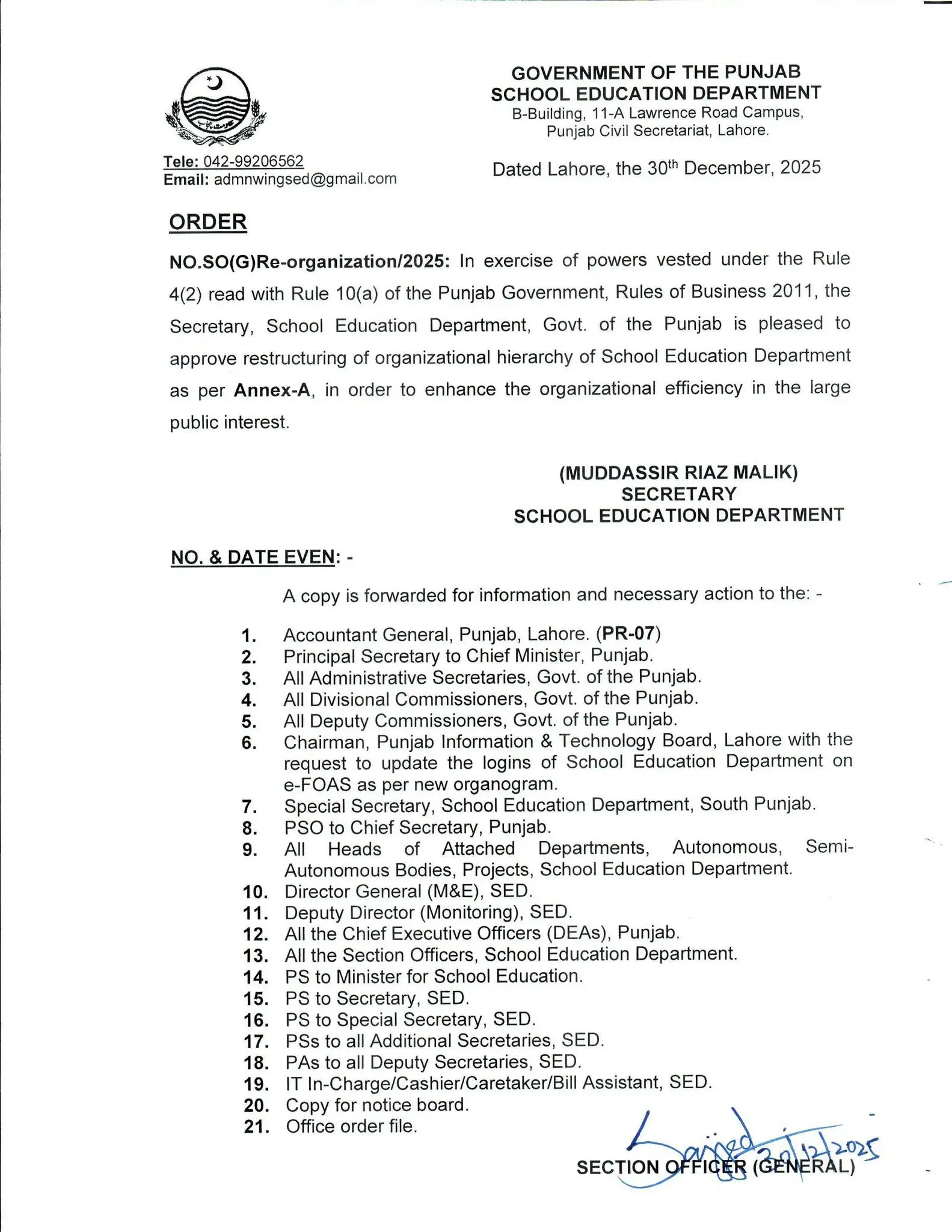
On 30 December 2025, the Secretary, School Education Department Punjab, approved a formal order under the Punjab Government Rules of Business 2011 to restructure the department’s organizational hierarchy.
In plain terms, this means:
- The internal structure of SED is being reorganized
- Reporting lines are being clarified
- Roles and responsibilities are being adjusted
- Digital systems will reflect the new organogram
The official purpose stated in the order is to enhance organizational efficiency in the larger public interest.

Why Was This Restructuring Needed?
Let’s be honest. Punjab’s school system is massive:
- Thousands of public schools
- Millions of students
- Tens of thousands of teachers and staff
Over time, such a system can suffer from:

- Overlapping responsibilities
- Delayed decision-making
- Confusing reporting channels
- Weak coordination between offices
The restructuring aims to fix these issues before they grow into bigger problems.
Legal and Administrative Authority Behind the Decision
The restructuring was approved under:
- Rule 4(2)
- Rule 10(a)
of the Punjab Government Rules of Business 2011

This means:
- The decision is legally valid
- It follows proper administrative procedure
- It applies across the entire School Education Department
This is not a temporary arrangement—it’s an official administrative reform.
Who Will Be Affected by This Change?
The order was circulated to a wide range of offices, which shows how broad the impact is.
Key Stakeholders Include:
- School Education Department (Head Office)
- Chief Executive Officers (DEAs)
- Divisional Commissioners
- Deputy Commissioners
- Monitoring & Evaluation Wings
- Punjab IT Board (PITB)
- Attached and autonomous bodies
- Section officers and secretariat staff
Even IT staff, bill assistants, and caretakers are part of the updated structure. That tells you this is not just about senior officers—it’s a system-wide change.
What Changes Can We Expect in Practical Terms?
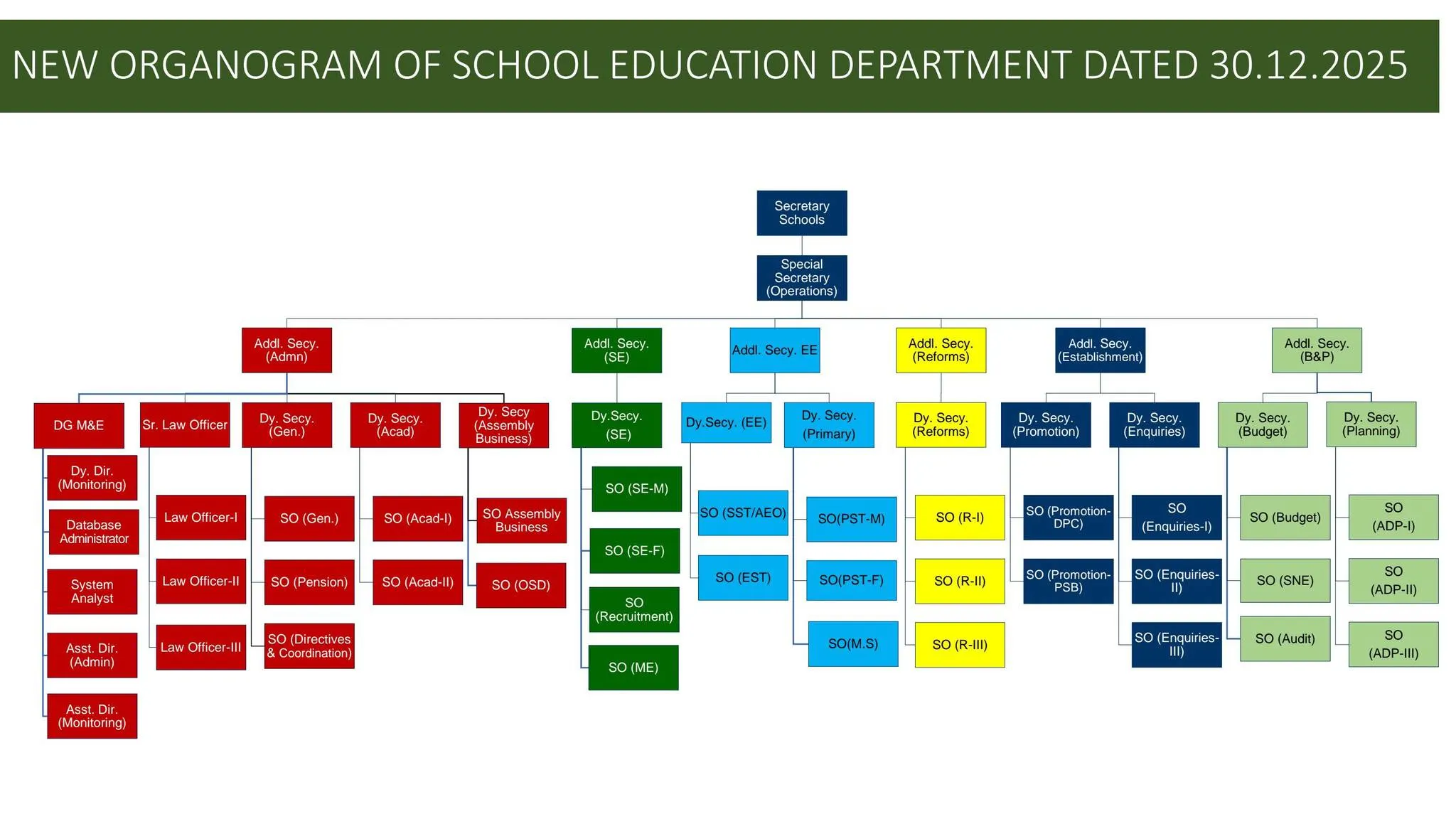
Although the detailed organogram is mentioned in Annex-A, the intent of restructuring usually includes:
Likely Improvements
- Clearer reporting lines (who reports to whom)
- Faster approvals and decision-making
- Better coordination between departments
- Stronger monitoring and accountability
- Reduced duplication of work
For schools and teachers, this can mean less confusion and fewer delays when dealing with administrative matters.
Role of Technology in the New Structure
One important instruction in the order is directed to the Punjab Information & Technology Board (PITB).
What PITB Has Been Asked to Do:
- Update SED logins on e-FOAS
- Align digital systems with the new organogram
This shows that restructuring is not just on paper. Digital workflows will also change, which can improve transparency and tracking of tasks.
How This Can Benefit Teachers and Schools
While teachers may not see changes overnight, the long-term benefits can include:
- Faster resolution of administrative issues
- Better monitoring support instead of pressure
- Clear channels for complaints and feedback
- Reduced paperwork confusion
When offices work smoothly, schools feel the difference.
New Insights Not Found in Other Blogs
Most articles don’t mention:
- The role of PITB and system updates
- Impact on monitoring and evaluation teams
- How restructuring can reduce delays at school level
- That even support staff roles are affected
- The long-term effect on governance quality
Common Concerns People Have (And the Reality)
- “Will teachers’ jobs be affected?”
→ No indication of job cuts. It’s about structure, not layoffs. - “Will this increase paperwork?”
→ Ideally, it should reduce confusion, not increase it. - “Is this political?”
→ The order is administrative and issued under existing rules.
Change always feels uncomfortable at first, but chaos is worse than adjustment.
Frequently Asked Questions (FAQs)
- When will the new organizational hierarchy be implemented?
The order was issued in December 2025 and is effective for implementation in 2026.
- Does this restructuring affect teachers directly?
Not directly, but improved administration can positively affect schools and teachers.
- Is this restructuring legally valid?
Yes, it is approved under the Punjab Government Rules of Business 2011.
- Will digital systems change?
Yes. PITB has been directed to update systems like e-FOAS as per the new structure.
- Why is restructuring important for education?
A clear structure improves decision-making, accountability, and service delivery.
Final Conclusion
The Punjab Schools Restructuring of Organizational Hierarchy 2026 is a thoughtful administrative step aimed at making the education system more efficient, responsive, and organized. While it may seem like an internal government matter, its real impact will be felt in smoother operations, better coordination, and improved support for schools. Strong systems don’t happen by accident—they’re built carefully, and this restructuring is one such effort toward a better education future for Punjab.