Rescue 1122 Safety Exercise for Teachers, Students in Punjab Schools
 Follow YourSiteName on Google News & scroll through your favourite content faster!
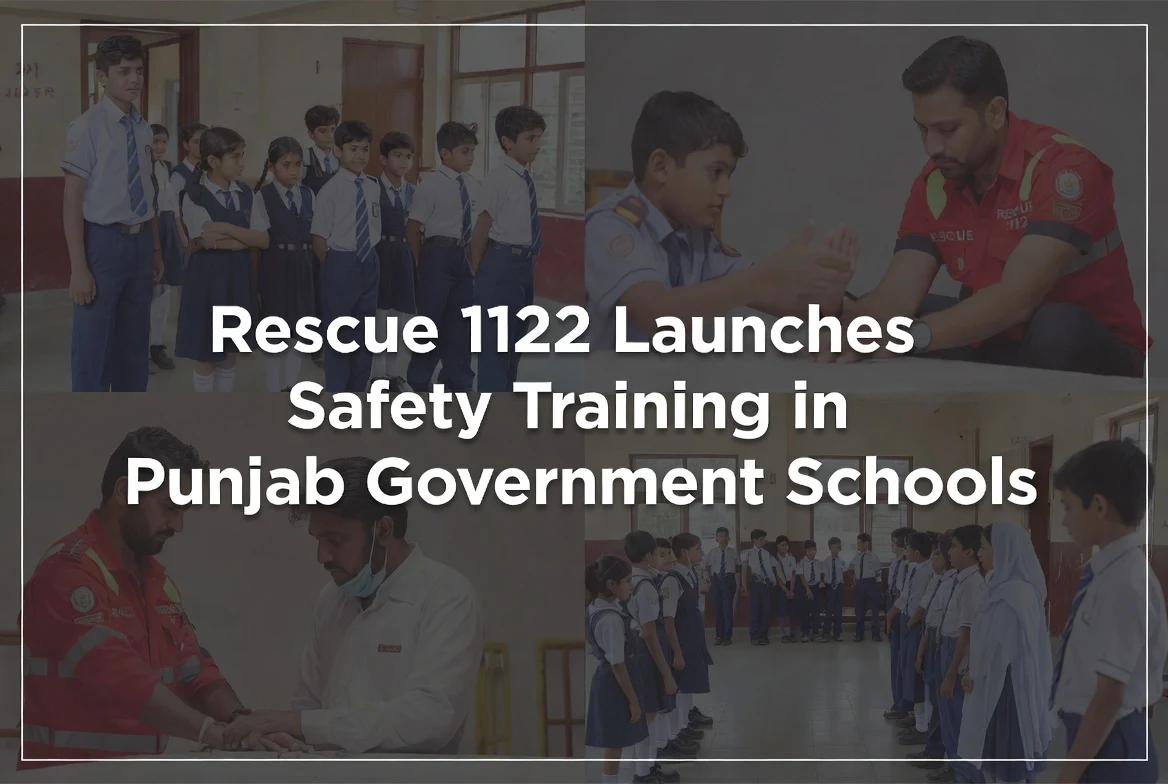

Imagine a classroom where students not only learn math and science, but also learn how to save a life. That’s exactly what the Punjab government, through Rescue 1122, is making possible.
 Join WhatsApp
A province-wide safety exercise and training campaign has been launched in government schools across Punjab. This initiative focuses on preparing teachers and students to handle emergencies calmly and correctly — instead of panicking when every second matters.

This blog explains what the Rescue 1122 safety exercise is, what training is being given, why it matters so much, and how it is changing the safety culture in schools.
Why Rescue 1122 Started Safety Exercises in Schools
Schools are crowded places. Thousands of students gather daily in classrooms, halls, and playgrounds. In emergencies like fire, earthquakes, medical collapse, or accidents, untrained response can turn small incidents into disasters.
Rescue 1122 understands this reality. That’s why it launched a school safety campaign to:

- Teach students how to react in emergencies
- Train teachers to guide students safely
- Reduce injuries during panic situations
- Build confidence and awareness
- Create a “safe Punjab” mindset from a young age
This is not just training — it’s life preparation.
Who Is Being Trained?
The safety exercise covers:

- School teachers
- Female and male students
- Government schools at different levels
- Urban and rural institutions
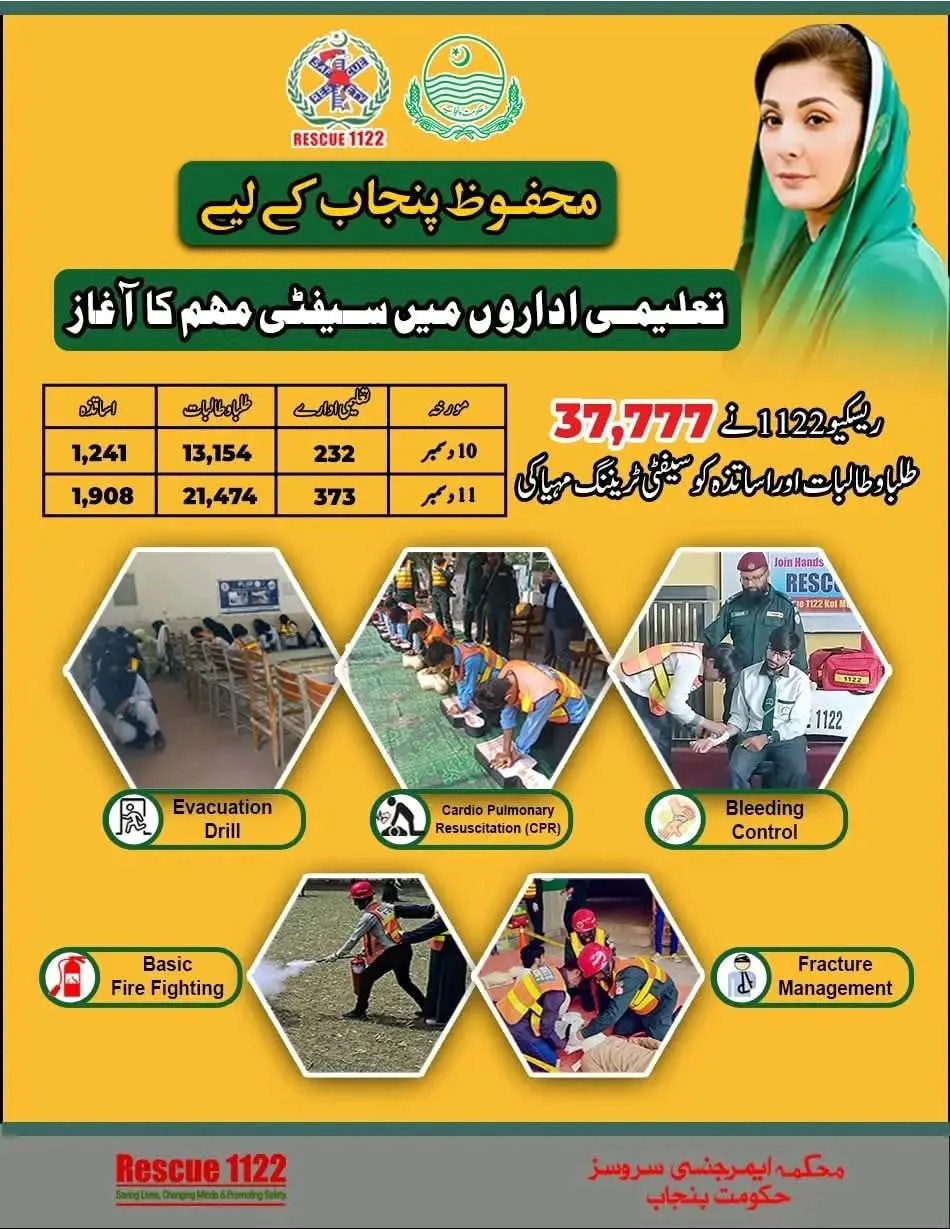
In just two days of activities, tens of thousands of teachers and students were trained across multiple districts — showing the scale and seriousness of this effort.
What Kind of Training Is Included?
Unlike basic lectures, Rescue 1122 provides hands-on practical training. Students don’t just listen — they practice.
-
Evacuation Drill
Students learn:

- How to leave classrooms safely
- How to walk, not run
- How to follow teachers’ instructions
- How to use emergency exits
This drill teaches discipline during chaos — a skill that saves lives.
-
CPR (Cardio Pulmonary Resuscitation)
CPR training helps students and teachers learn:
- How to help someone who has collapsed
- What to do if breathing stops
- How to act before an ambulance arrives
Even basic CPR knowledge can mean the difference between life and death.
-
Basic Fire Fighting
Participants are taught:
- How fires start
- How to use a fire extinguisher
- When to fight a fire and when to evacuate
- How to protect themselves from smoke
This training works hand-in-hand with the recent fire safety instructions in schools.
-
Bleeding Control
This part focuses on:
- Stopping heavy bleeding
- Using pressure correctly
- Helping accident victims safely
Simple steps learned here can save lives on roads, playgrounds, or even at home.
-
Fracture Management
Students and teachers learn:
- How to recognize fractures
- How to keep the injured person still
- What NOT to do in case of broken bones
This prevents further injury before professional help arrives.
Why This Training Is a Big Deal
Most competitor news reports simply say:
“Rescue 1122 trained students and teachers.”
But they miss the real impact.
This training:
- Builds confidence instead of fear
- Turns students into first responders
- Reduces dependency during emergencies
- Creates responsible citizens
- Makes schools safer without expensive equipment
A trained student is not helpless — they are prepared.
How Teachers Benefit from This Exercise
Teachers are often the first adults students look at during emergencies.
After this training, teachers:
- Know how to manage crowds
- Understand evacuation plans
- Can guide students calmly
- Can give basic first aid
- Feel more confident in emergencies
This improves overall school safety leadership.
Long-Term Impact on Punjab Schools
If continued regularly, this safety exercise can:
- Reduce school accidents
- Improve emergency response time
- Create safety-aware generations
- Support the “Safe Punjab” vision
- Save countless lives in the future
Knowledge doesn’t expire — and neither does safety awareness.
Frequently Asked Questions (FAQs)
- Is Rescue 1122 training compulsory for schools?
While not a regular subject yet, schools are strongly encouraged to participate for safety reasons.
- Do students need prior knowledge to attend training?
No. Training starts from a very basic level.
- Is the training practical or theoretical?
Mostly practical, with live demonstrations and drills.
- Can this training help outside school?
Yes. Skills like CPR and bleeding control are useful anywhere.
- Will this training continue in the future?
Yes. Rescue 1122 plans to expand safety campaigns further.
Conclusion
The Rescue 1122 safety exercise in Punjab government schools is a powerful step toward a safer future. By training teachers and students in evacuation drills, CPR, fire fighting, and first aid, Punjab is not just educating minds — it is protecting lives. When children learn how to stay calm and help others, schools become more than buildings — they become safe communities.