Safety and Security SOPs in All Public & Private Schools Punjab 2025–26
 Follow YourSiteName on Google News & scroll through your favourite content faster!
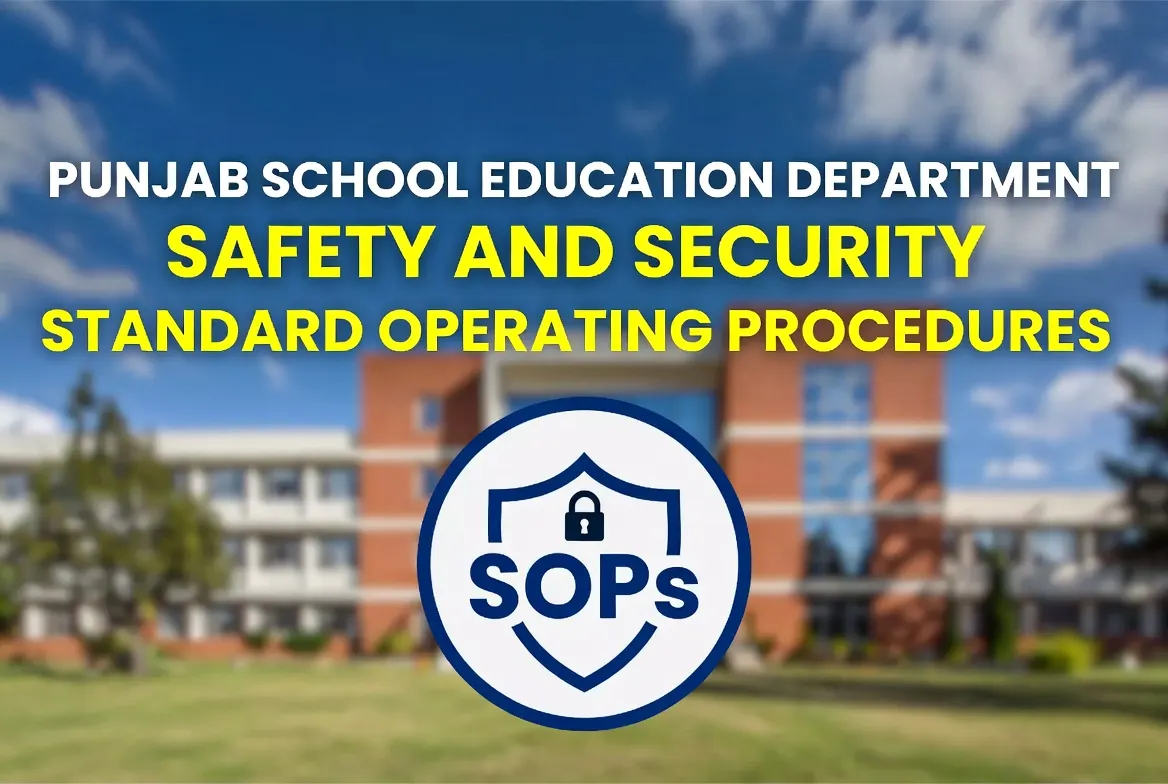

Imagine sending your child to school and feeling confident they’re safe, whether in class, corridor or playground. That peace of mind matters more than anything. In 2025, the provincial government of Punjab took a big step toward stronger safety in schools. With a fresh circular dated December 5, 2025, it instructed all public and private schools to follow a new set of Security SOPs and placed responsibility squarely on school heads, district officers, and administrators.
 Join WhatsApp
This blog post walks you through the new requirements. We’ll explain who must follow them, how schools are classified, what security measures are ordered, and why this matters now more than ever. I’ll also compare this update with existing security guidelines (especially from older school-security policies used by some institutions), show where the new rules go further and where questions still remain.
If you’re a parent, teacher, school administrator or just interested in school safety in Punjab, this post gives you a full, easy-to-read guide.
Punjab Schools Safety Measure SOPs 2025-26
✅ The Official Order — Punjab’s 2025 Directive
- On 5 December 2025, the School Education Department of Punjab issued a circular titled “CATEGORY-WISE SECURITY CLASSIFICATION AND IMPLEMENTATION OF SECURITY SOPS IN ALL PUBLIC & PRIVATE SCHOOLS”.
- The circular is addressed to Chief Executive Officers (CEOs) of District Education Authorities (DEAs) across Punjab. It instructs that ALL public schools — and private schools as well — be categorized according to their student enrollment and that security SOPs be strictly implemented as per their category.
🎯 How Schools Are Categorized
Schools are grouped based on how many students they have:
- Category A+: Enrollment more than 2,000 students
- Category A: Enrollment between 500 and 2,000 students
- Category B: Enrollment fewer than 500 students
Private schools must also be classified using the same criteria, in coordination with district administration. Updated lists are to be submitted to the designated department email for record-keeping.

That means every school, large or small, public or private, in Punjab is now formally under this security directive.
What the New SOPs Require — Safety from Gate to Classroom
The new security order doesn’t just ask for vague vigilance. It lays out concrete, practical steps that schools must follow. Below are the major requirements that schools must implement. Many reflect or expand upon previous school-safety guidelines, but now under stricter oversight and accountability.
🏫 Structural & Physical Security Measures
- Solid perimeter walls / boundary fences — Schools must have proper walls around the campus to prevent unauthorized entry. In many past safety guidelines, eight-foot walls plus barbed wiring were recommended. Schools may also need secure fencing depending on their size and risk level.
- Single entry/exit gate (where appropriate) — To better control who enters and exits, schools should disable secondary gates; only one main gate should be active for entry/exit, especially in sensitive or high-enrollment schools.
- Metal detectors / walk-through gates — For higher-risk schools or those with many students, schools may need to employ metal detection or similar screening at entry, to prevent weapons, sharp objects or other hazards from entering campuses.
📹 Surveillance, Access Control, Visitor Management
- CCTV cameras everywhere that matters — Entrances, gates, corridors, rooftops, grounds, playgrounds — all must be under video surveillance, with cameras properly working and monitored.
- Visitor register / entry log — Every visitor (parents, guests, delivery persons, maintenance staff, etc.) must be recorded: name, CNIC (or ID number), purpose, time in and out. No unregistered outsider should roam freely.
- Trained security guards at entry — Schools must deploy trained security personnel at main gates to check IDs, inspect bags, control entry — and prevent unauthorized or suspicious entry. Credentials of guards must be verified through local police.
🚨 Emergency Preparedness & On-Campus Safety
- Emergency / evacuation plans displayed — Schools should have visible emergency instructions, escape routes, and clear procedures for fire, medical emergencies, or other crises. Staff and students must know what to do.
- Regular safety drills and training — Fire drills, evacuation drills, anti-terror or security awareness drills (as per need), mock training so everyone knows their role. These drills help prepare students and staff rather than leaving everything to chance.
- Bag checks and banning of dangerous items — Students must be prevented from bringing weapons, knives, sharp objects or other harmful items inside. Random or regular bag checks may be conducted.
🛡 Accountability, Monitoring, and Regular Audits
- Immediate security audits of all schools — The directive calls for a comprehensive audit of all public and private schools to check perimeter walls, CCTV, gates, guard deployment, visitor logs, emergency preparedness, etc. Any deficiency must be corrected without delay.
- Daily or regular inspections by district/education officers — Field officers, education officers, or assigned monitors will regularly visit schools to inspect compliance. This is no longer optional — it’s systematic oversight.
- Headteachers & school-heads held responsible — If a school fails to comply — e.g. missing security guard, broken CCTV, unsecured gates — school heads may face disciplinary action. The new order places clear responsibility on them.
📚 How This Update Differs from Older Security Guidelines
Many private schools — especially those associated with organizations like the Punjab Education Foundation (PEF) — already had safety and security SOPs in place. However, the 2025 directive goes further in several important ways:

| Old/Existing Guidelines (e.g. PEF or earlier SOPs) | What the 2025 Update Adds / Strengthens |
| Recommended perimeter walls, CCTV, guard at gate, visitor log under earlier SOPs for partner schools. | Security requirements are now mandatory for all schools (public & private), not just selected “partner” ones. |
| Some schools had security guards, CCTV in some areas — but coverage was spotty; many lacked secure fences or proper access control. | The new directive orders full campus security — CCTV at all critical points, single gate control, metal detectors, bag checks, visitor registration. |
| Security audits were optional or sporadic — compliance inconsistent. | The 2025 policy mandates immediate, comprehensive audits, followed by daily/regular monitoring by district authorities. |
| Focus mostly on physical security and basic visitor control. | The updated SOPs include emergency preparedness, evacuation plans, security drills, and real accountability (penalties for non-compliance). |
| Many private schools followed rules voluntarily; government schools often lagged behind. | Now every school — large or small — must comply, under direct government oversight and with clear classification (A+, A, B). |
In short: the 2025 SOPs shift school-safety from being “recommended best practice” to being non-negotiable requirement — for the first time on such a large and unified scale across Punjab.
💡 What the New SOPs Bring That Was Missing Before
Beyond strengthening existing norms, the 2025 security order introduces some important new dimensions:
- Uniform classification (A+, A, B) ensures schools are judged by size and risk profile; small and large schools aren’t treated the same.
- Mandatory security audits & monitoring — no more waiting for incidents; inspections will be proactive and regular.
- Real accountability — school heads and administrators are now personally responsible; failure to comply can mean disciplinary action or closure.
- Standardized emergency planning — not just perimeter security, but also readiness for fire, medical emergencies, evacuation, unexpected threats.
- Equal application to public and private schools — previously many private schools had better security, government schools were often lacking. Now all are under same rules.
As a result, the 2025 update doesn’t just patch gaps — it rebuilds the foundation for safer schooling across the province.
⚠ Challenges & Questions That Remain
Even with these improvements, some issues remain or could emerge in practice. Here are things to watch out for:
- Resources & funding: Not every school (especially small ones) will find it easy to build high fences, install CCTV, buy metal detectors, or hire trained guards. Who will pay for this?
- Implementation delays: An audit or directive doesn’t guarantee action — especially in rural or poorly funded areas. Routine monitoring will test real commitment.
- Guard training and vetting: Hiring security guards is one thing; properly vetting them, checking their background, giving them training — that’s harder. Mistakes can lead to misuse or false sense of security.
- Privacy & freedom concerns: Bag checks, metal detectors, CCTV everywhere — some parents or students might feel uneasy about constant surveillance. Balance matters.
- Emergency planning culture: Having evacuation plans and drills is good — but only if staff and students take them seriously. Otherwise, they become mere formalities.
For the new SOPs to actually make schools safer — not just look safer — Punjab will need real commitment, funding, transparency and follow-up.
🤝 Why This Matters for Everyone — Parents, Teachers & School Heads
- Parents: You now have the right to ask your child’s school if they follow the 2025 SOPs. Do they have CCTV, a secure gate, trained guard, visitor logs and emergency plan? Ask and check.
- Teachers & Staff: Your safety is part of this too. Schools must provide a safe work environment just like a safe learning space. Know the protocols, ask for drills and awareness sessions.
- School Heads & Administrators: This is no longer optional. Compliance is mandatory, and you’ll be accountable. Plan, budget, hire wisely, and implement fully.
- School-management bodies / Parent-Teacher Associations: You can play a watchdog role. Help monitor implementation, remind authorities, demand transparency — especially in under-resourced schools.
❓ FAQs — What People Often Ask About the New Security SOPs
Q1: Do these rules apply to both public (government) schools and private schools?
A: Yes — the 2025 circular makes it clear the SOPs apply to all schools in Punjab, public and private alike.
Q2: What determines how strict a school’s security needs to be?
A: It depends on the school’s size and student population. Schools are classified into A+, A, or B category (based on more than 2,000; 500–2,000; or fewer than 500 students). Larger schools generally need more robust measures.
Q3: Does every school need CCTV and metal detectors?
A: At minimum, CCTV and basic entry control are required. For schools in higher-risk areas or with more students, metal detectors and stricter entry screening may be mandatory.
Q4: Who will check that schools really follow these rules?
A: Field officers from district education authorities, monitoring teams — they will conduct audits and surprise inspections. School heads must report compliance.
Q5: What happens if a school fails to implement security SOPs?
A: The new directive holds school heads responsible. Schools may face disciplinary actions, administrative warnings, or even temporary closure until deficiencies are fixed.
✅ Final Thoughts — A Big Step Forward, But Not the Final Word
The Punjab 2025 Security SOPs for schools mark a major shift. For the first time, safety — from walls and gates to cameras, guards and emergency plans — isn’t optional or “nice to have.” It’s mandatory. Every school must comply.
But rules on paper don’t guarantee safety on ground. Funding, honest implementation, regular checks, and caring oversight will decide whether our schools truly become safe havens — or just safer on paper.
If the schools, authorities, parents and communities all work together, this could be the beginning of a new era: schools in Punjab where students learn without worry, parents rest assured, and staff can teach with peace of mind. And that’s the future we all want.
In a nutshell: next time your child goes to school — you should be able to feel confident: not just about their books or classes — but about their safety too.